Views: 43
Choosing the right home elevator is about more than moving between floors. It can make everyday life safer for senior citizens, improve accessibility for people with mobility challenges, and add lasting convenience and elegance to your property.
However, with several technologies, designs, capacities, and price ranges available, you may naturally wonder: Which type of elevator is best for a home?
The answer depends on your available space, number of floors, passenger capacity, family requirements, design preferences, and budget. This guide compares the most popular options and introduces home lift models from Odyssey Elevators to help you make an informed decision.
Which Type of Elevator Is Best for a Home?
A compact, machine-room-less home elevator is often the best choice for a modern residence because it requires less space and can offer smooth, convenient travel. However, every home is different.
For example, a one-passenger circular home lift may suit a compact duplex. Meanwhile, a six-passenger premium home lift may better serve a large family or luxury villa.
Before selecting the best elevator for a home, consider:
- The number of people using the lift
- The age and mobility of family members
- Available installation space
- Number of floors
- Required passenger capacity
- Safety features
- Interior design preferences
- Installation and maintenance requirements
- Overall budget
A professional site assessment can help identify the right solution for your property.
Popular Types of Home Elevators
1. Circular Home Lifts
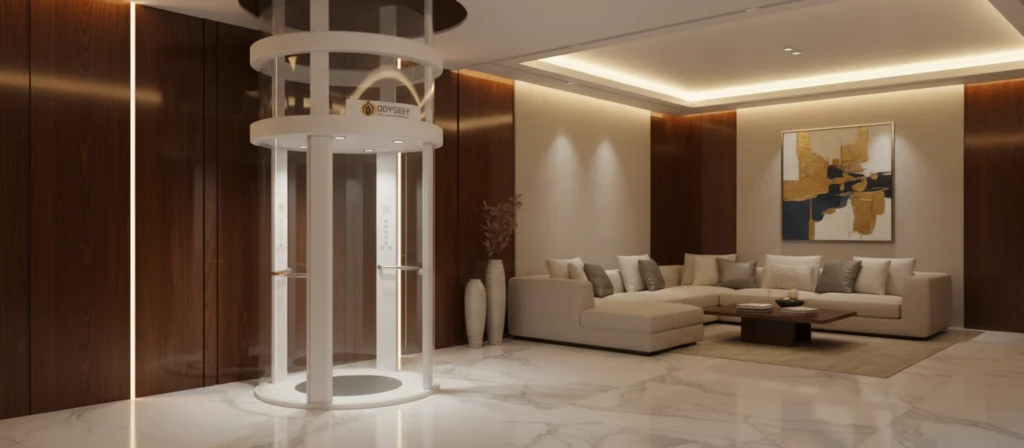
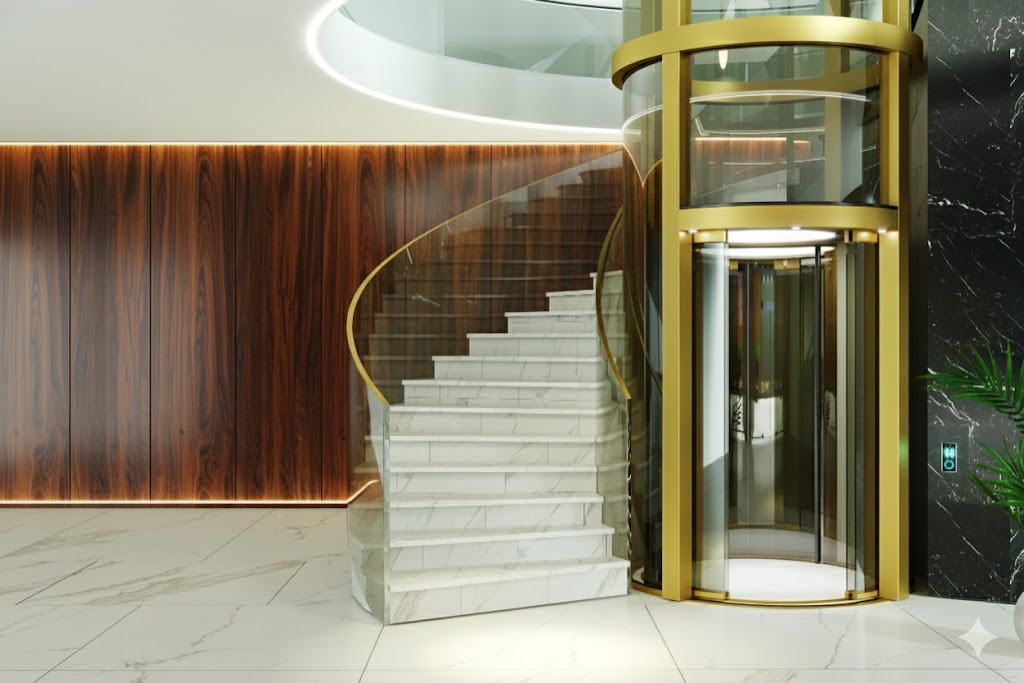
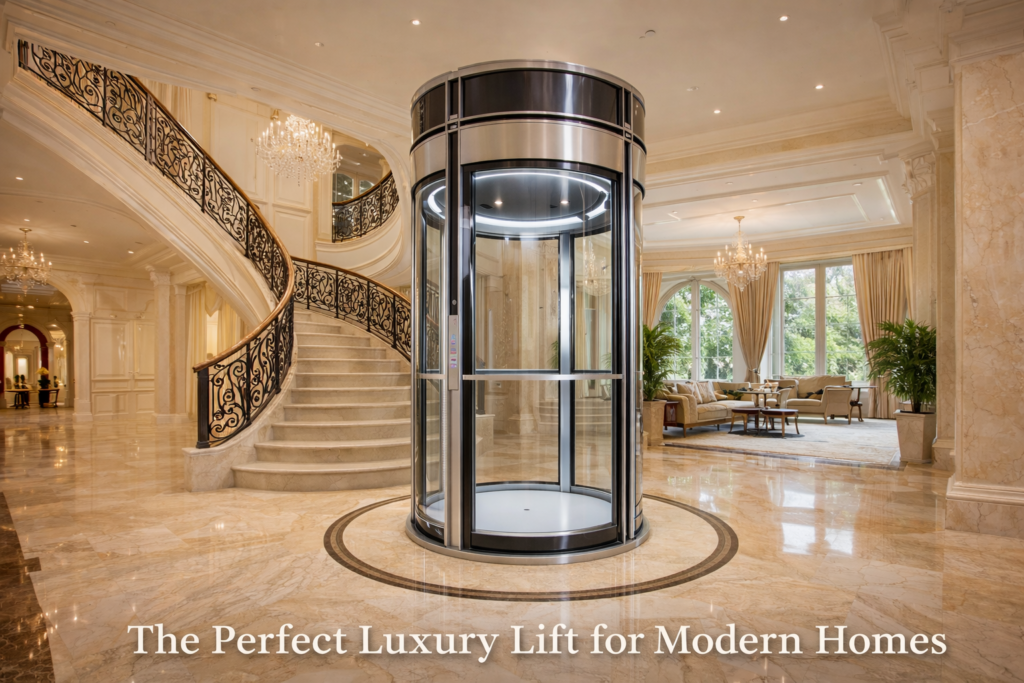
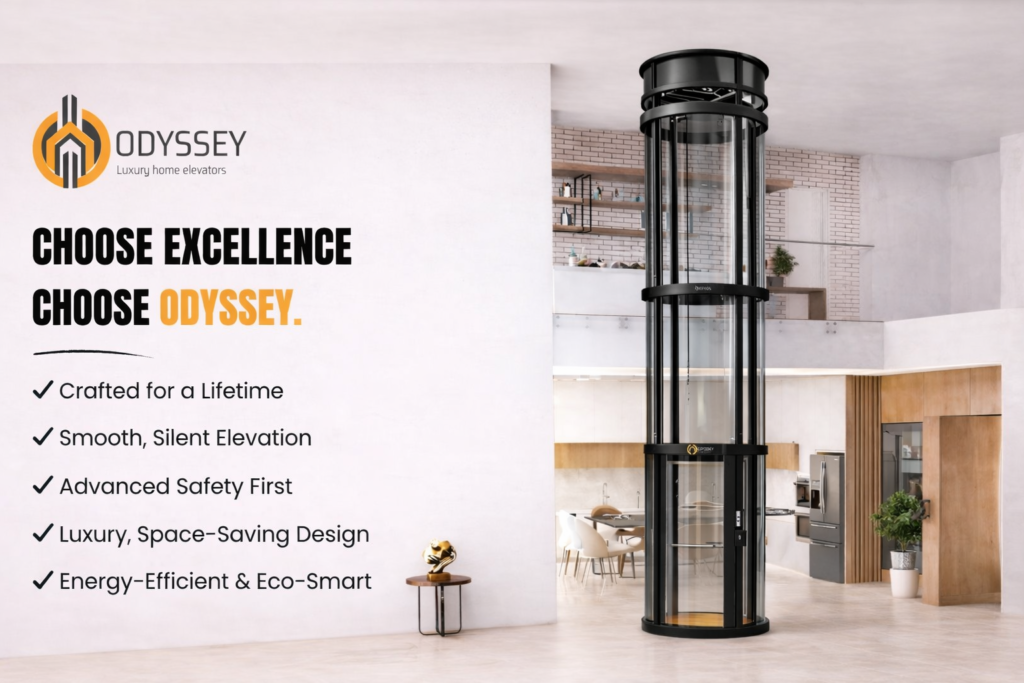
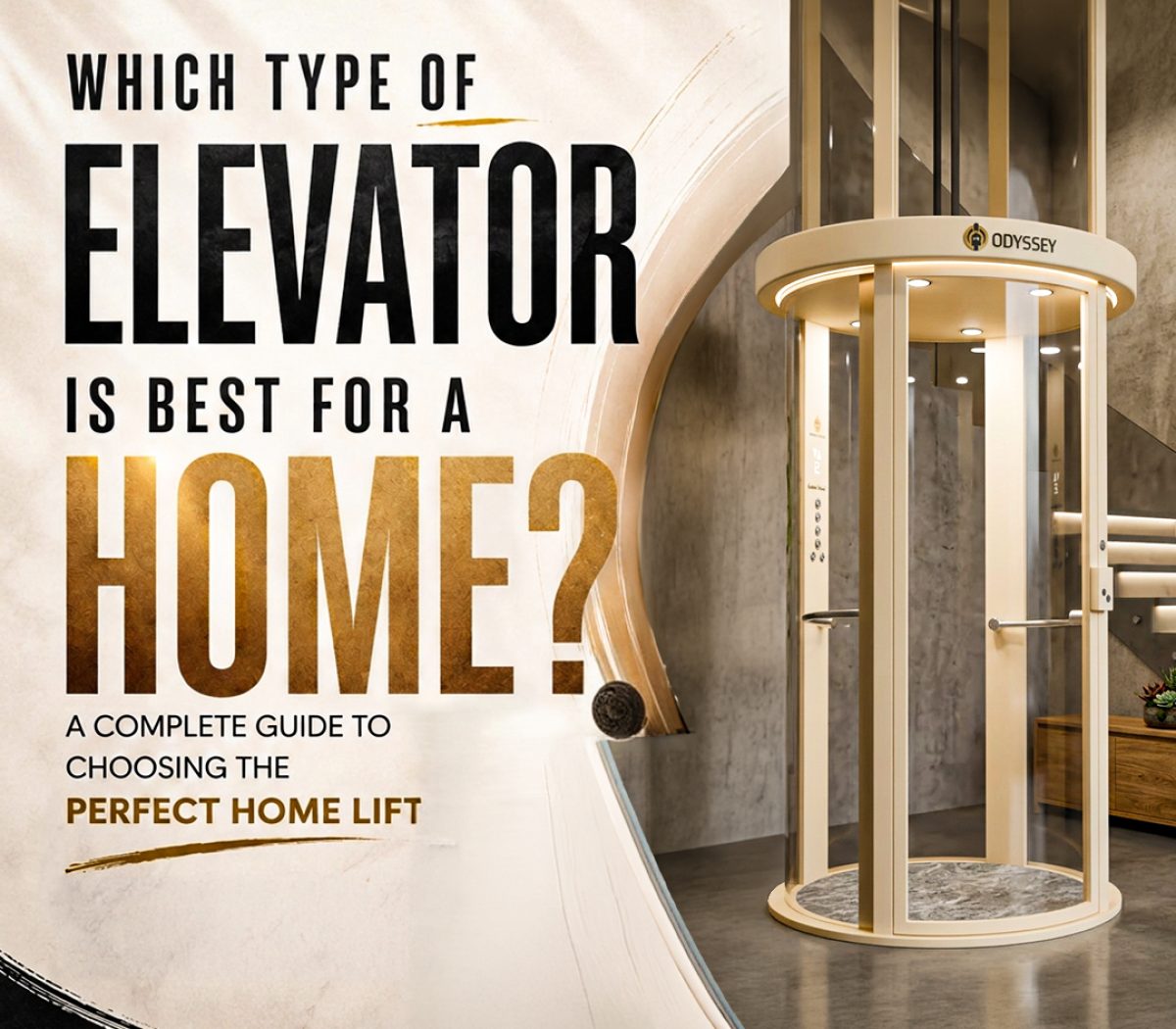
A circular home lift is a visually striking choice for modern villas, duplexes, and premium residences. Its distinctive shape can turn the elevator into an attractive architectural element.
Circular lifts may also work well in properties where homeowners want a stylish solution without making the cabin look bulky.
They are ideal for:
- Contemporary homes
- Luxury villas
- Duplex residences
- Compact spaces
- Homeowners seeking a distinctive design
Odyssey Elevators offers circular models with capacities ranging from one to six passengers, giving homeowners options for different spaces and family sizes.
2. Hydraulic Home Elevators
Hydraulic elevators use a powered system to move the cabin. They usually provide a smooth ride and can carry heavier loads. Therefore, they may suit homes that require greater passenger capacity.
However, depending on their design, some hydraulic systems may require additional space for equipment. Homeowners should also consider maintenance and structural requirements before choosing this option.
3. Traction and Gearless Elevators
Traction elevators move the cabin using ropes, belts, and a counterweight system. Gearless models can offer efficient and comfortable performance, particularly in properties with multiple floors.
These elevators may suit:
- Multi-storey houses
- Larger residences
- Homes with frequent lift usage
- Families prioritising smooth travel
Their exact space and structural requirements depend on the model and installation configuration.
4. Pneumatic Vacuum Elevators
Pneumatic elevators use air pressure to move the cabin through a cylindrical shaft. Their transparent, futuristic appearance can complement modern interiors.
They can be suitable for limited passenger use. However, homeowners should carefully compare cabin capacity, ride experience, availability of technical support, and maintenance requirements before deciding.
5. Machine-Room-Less Home Elevators
A machine-room-less elevator does not require a separate conventional machine room. This can save valuable space and simplify integration into certain homes.
It can be a practical option for:
- Existing houses with limited space
- Newly constructed villas
- Duplex homes
- Properties where space efficiency matters
Nevertheless, site conditions and technical specifications determine whether this configuration is suitable.
Odyssey Elevators: Models and Starting Prices
Odyssey Elevators provides home lift options for individual users, couples, small families, and larger households.
| Model | Capacity | Type | Starting price |
|---|---|---|---|
| Orbit Micro | 1 passenger | Circular home lift | ₹15 lakh |
| Orbit Standard | 2 passengers | Circular home lift | ₹16 lakh |
| Orbit Max | 3 passengers | Circular home lift | ₹17 lakh |
| Apex Premium | 6 passengers | Circular home lift | ₹18 lakh |
| Nova Standard | 3 passengers | Home lift | ₹18 lakh |
| Nova Max | 6 passengers | Premium home lift | ₹19.2 lakh |
These figures are starting prices, not final quotations. The final home elevator price in India may vary according to:
- Number of floors and stops
- Total travel height
- Site and structural conditions
- Cabin dimensions
- Door configuration
- Technical specifications
- Interior finishes
- Safety features
- Installation requirements
- Customisation choices
Contact Odyssey Elevators for a site-specific assessment and accurate quotation.
Which Odyssey Home Lift Should You Choose?
Orbit Micro
Starting from ₹15 lakh, Orbit Micro is a one-passenger circular home lift. It may suit individual users and compact homes with limited installation space.
Orbit Standard
Orbit Standard is a two-passenger circular lift starting from ₹16 lakh. It can be a practical home lift for senior citizens, couples, and small households.
Orbit Max
Starting from ₹17 lakh, Orbit Max accommodates three passengers. It combines greater capacity with the distinctive appearance of a circular home lift.
Apex Premium
Apex Premium is a six-passenger circular home lift starting from ₹18 lakh. Its capacity makes it suitable for large families and spacious villas.
Nova Standard
Nova Standard is a three-passenger home lift starting from ₹18 lakh. It can serve families looking for a comfortable residential mobility solution.
Nova Max
Starting from ₹19.2 lakh, Nova Max is a six-passenger premium home lift. It may suit luxury residences and multi-generational households requiring additional cabin capacity.
A Practical Family Example
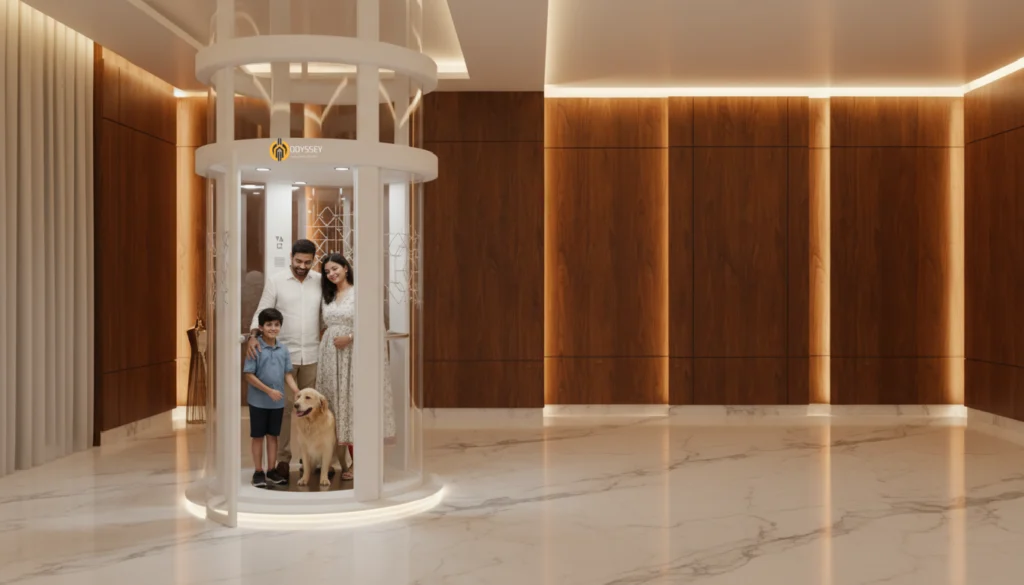
Imagine a family building a three-storey villa. Initially, they consider a compact two-passenger lift for their elderly parents. However, they also expect children, guests, and caregivers to use it.
After evaluating their long-term needs, they realise that a three- or six-passenger model may offer better convenience. They then compare the available space, safety provisions, cabin comfort, and budget before selecting a suitable model.
This example highlights an essential lesson: do not choose a lift based only on current needs. Consider how your family may use it over the coming years.
7 Factors to Check Before Buying a Home Elevator
1. Available space
Measure the proposed installation area carefully. Include sufficient space for the shaft, doors, access, and required equipment.
2. Passenger capacity
Choose a capacity based on regular users rather than occasional assumptions. A larger family may need a three- or six-passenger lift.
3. Accessibility
If senior citizens or people with mobility challenges will use the lift, prioritise easy entry, comfortable controls, and suitable cabin space.
4. Safety features
Discuss emergency communication, backup arrangements, door safety, alarm functions, and other protective features with the provider.
5. Number of floors
The travel height and number of stops can affect the system, installation requirements, and total price.
6. Maintenance support
Ask about scheduled maintenance, service availability, spare parts, response times, and warranty conditions.
7. Design and customisation
Select cabin finishes, colours, lighting, doors, and control panels that complement your home without compromising usability.
Frequently Asked Questions
What is the best elevator for a small home?
A compact one- or two-passenger model, such as Orbit Micro or Orbit Standard, may suit a small home. However, a site assessment should confirm the installation requirements.
Which home lift is suitable for senior citizens?
A lift with convenient access, simple controls, smooth movement, emergency features, and sufficient cabin space is generally suitable. Capacity should also accommodate a caregiver when necessary.
Can an elevator be installed in an existing house?
In many cases, yes. However, the provider must evaluate available space, floor openings, structural conditions, electrical requirements, and local regulations.
Does a home elevator require a machine room?
Not every model requires a separate machine room. Requirements vary according to the technology and product configuration.
What is the home elevator price in India?
Odyssey Elevators models listed here start from ₹15 lakh and reach ₹19.2 lakh. Final costs depend on the model, floors, specifications, site conditions, and customisation.
Is a circular home lift suitable for a villa?
Yes, a circular lift can complement villas and modern residences, especially when homeowners value distinctive styling and space-conscious design.
Should I choose a three- or six-passenger lift?
A three-passenger lift may serve a small family, while a six-passenger model provides more room for larger or multi-generational households. Consider future requirements before deciding.
Conclusion
So, which type of elevator is best for a home? The best choice is the one that fits your property, family, accessibility requirements, safety expectations, and budget.
Compact circular lifts can suit smaller homes, while three- and six-passenger elevators may provide greater convenience for families and luxury villas. Most importantly, compare capacity, installation requirements, after-sales support, and long-term usability—not just appearance or starting price.
Odyssey Elevators offers several residential options, from the one-passenger Orbit Micro to the six-passenger Apex Premium and Nova Max. Contact Odyssey Elevators for a personalised consultation, site assessment, and quotation before making your final decision.