
Views: 4
For many homeowners, this is an important consideration when planning better accessibility for elderly family members or people with mobility difficulties.
Climbing stairs can become challenging with age, reduced mobility or certain physical limitations. A stair lift offers a practical way to travel between floors while seated.
It can help users move around their homes more comfortably.
The good news is that stair lift installation on existing staircase layouts is possible in many homes. These systems are designed to follow the staircase layout, reducing the need for major structural changes.
However, the staircase width, shape, condition and available landing space must be assessed before selecting a suitable model.
Can You Install a Stair Lift on an Existing Staircase?
Yes, many existing staircases can accommodate a stair lift without requiring major reconstruction.
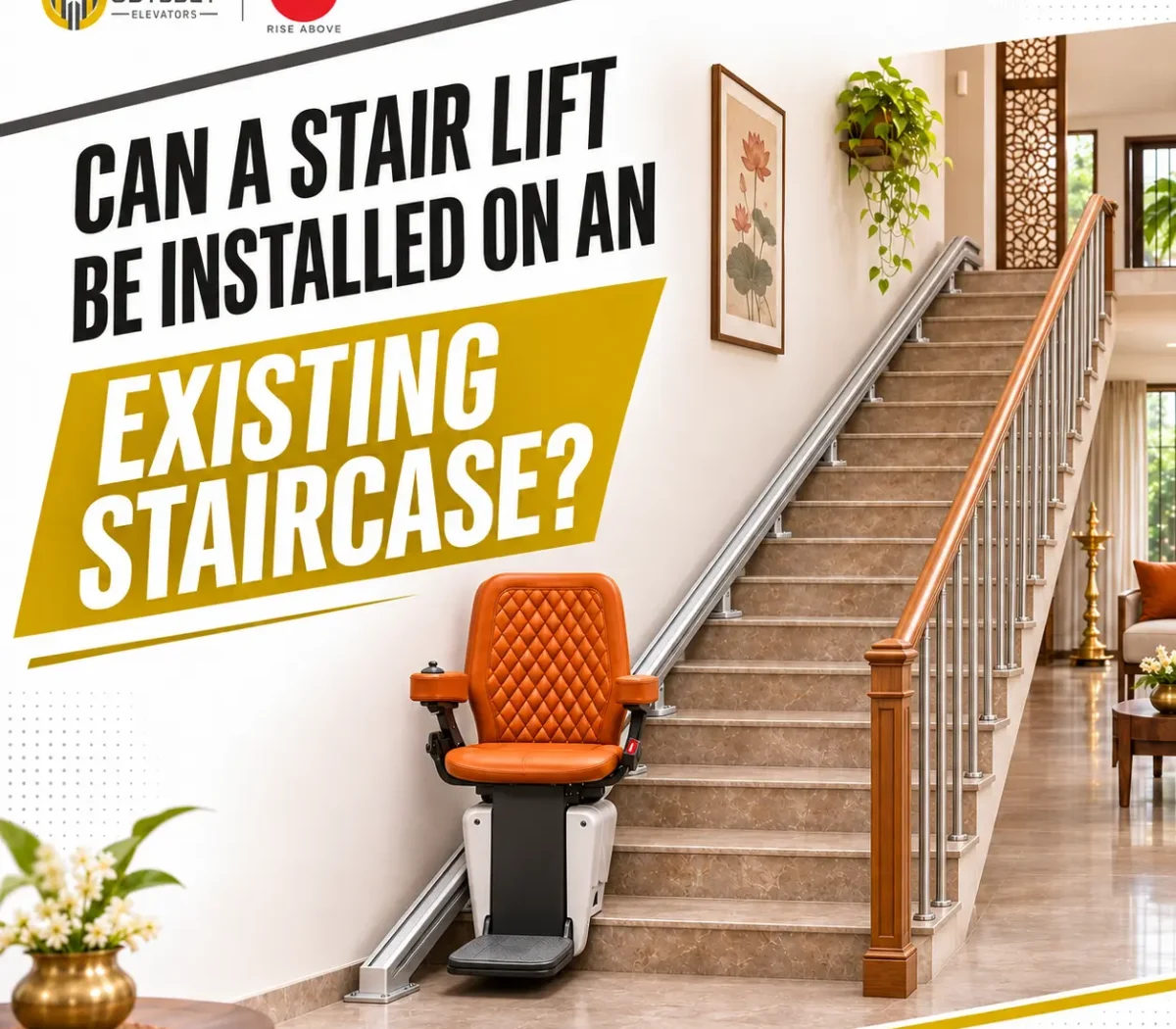
A typical stair lift operates using a rail fitted along the staircase. A motorised seat moves along this rail, allowing the passenger to travel between floors while seated.
Unlike a conventional home elevator, a stair lift generally does not require a separate lift shaft or dedicated machine room.
The installation is planned around the existing staircase, although the exact arrangement depends on the selected model and the home’s layout.
A professional site inspection is essential before proceeding. It helps identify possible installation challenges and confirms whether the staircase can safely accommodate the equipment.
For homeowners exploring stair lift installation on existing staircase options, the first step is to understand the staircase layout and the space available for the equipment.
What Types of Staircases Can Accommodate a Stair Lift?
The staircase layout plays an important role when planning a stair lift for existing stairs. Different staircase designs may require different rail arrangements.
1. Straight Staircases
Straight staircases without turns or bends are generally simpler to plan for stair lift installation.
A straight rail follows the staircase, allowing the seat to travel between floors along a direct path.
For suitable homes, stair lift installation on existing staircase designs can be planned with a rail that follows the existing steps.
However, the available width, step condition and space near the top and bottom landings must still be checked.
2. Curved Staircases
Homes with bends, curves or turns may require a specially designed curved rail.
The rail is planned according to the staircase measurements so that the seat can follow the turns along the route.
Professional stair lift installation on existing staircase layouts with curves requires accurate measurements and a suitable rail design.
The available landing space and passenger access must also be considered.
3. Staircases with Intermediate Landings
Some homes have a landing between two flights of stairs. These layouts require careful planning to ensure that the passenger can travel between levels comfortably.
The rail arrangement, turning space and stopping positions must be considered during the design stage.
A site assessment can help determine the most suitable configuration for this type of staircase.
How Does Stair Lift Installation on an Existing Staircase Work?
If you are considering staircase lift installation, understanding the process can help you prepare your home and make an informed decision.
Every stair lift installation on existing staircase project should begin with a proper assessment.
This helps the installation team understand the layout and identify any adjustments needed before work starts.
Step 1: Staircase Inspection
The installation team first checks whether your staircase is straight, curved or has intermediate landings.
They also look for obstacles, nearby doors and other features that could affect the installation.
Step 2: Taking Accurate Measurements
Measurements help determine the rail design and installation arrangement. The team may assess:
- Overall staircase length and width.
- Step dimensions and staircase angle.
- Curves, bends and intermediate landings.
- Available space at the top and bottom.
- Nearby doors, walls and other obstacles.
Step 3: Selecting the Right Model
The right stair lift should suit both the staircase and the person using it.
Consider seating comfort, mobility requirements, ease of operation and available safety features before choosing a model.
It is also useful to discuss the passenger’s weight requirements, preferred seating position and ability to operate the controls.
These details help the supplier recommend an appropriate solution.
Step 4: Rail Installation
Once the design is finalised, the rail is fitted along the staircase according to the manufacturer’s specifications.
Depending on the model, it is commonly secured to the steps or suitable supporting structure.
A separate elevator shaft is generally not required. However, the fixing method and any preparation work should be confirmed before installation begins.
Step 5: Testing and User Demonstration
After installation, qualified professionals should test the equipment and demonstrate how to operate it.
The user should understand the controls, seat belt, swivel seat (if available) and the recommended procedure if the equipment stops unexpectedly.
What Are the Important Stair Lift Installation Requirements?
Before choosing a stair lift, homeowners should understand the main stair lift installation requirements.
These factors help determine whether the equipment can be installed safely and conveniently.
Before confirming stair lift installation on existing staircase structures, the supplier should assess the staircase condition, width and available clearance.
- Staircase width: There should be sufficient room for the rail, seat and moving components while considering access for other family members.
- Staircase condition: The steps and supporting structure must be suitable for the proposed rail installation.
- Landing space: The passenger needs enough room to get on and off the seat comfortably at both ends.
- Electrical arrangements: Depending on the model, suitable electrical connections or battery charging arrangements may be required.
- Passenger comfort: The seat, controls, footrest and seat belt should be suitable for the intended user.
- Obstructions: Doors, furniture and other objects should not interfere with the movement of the stair lift.
These requirements should be discussed with the supplier during the initial assessment.
Do not select a model based only on photographs or general staircase measurements.
Checking these details early makes stair lift installation on existing staircase layouts easier to plan and helps homeowners understand any limitations before choosing a model.
Will Installing a Stair Lift Damage Your Existing Staircase?
This is a common concern among homeowners. Fortunately, many stair lift installations can be completed without major staircase reconstruction.
The rail is commonly secured to the steps or staircase structure, depending on the manufacturer’s installation method.
The exact fixing arrangement depends on the equipment, staircase material and its condition.
Before the work begins, ask your supplier to explain where the rail will be fitted, whether drilling is required and if any modifications are necessary.
This helps you understand the installation process and avoid unexpected changes.
Benefits of Installing a Stair Lift in an Existing Home
For families looking to improve home accessibility, installing a stair lift can offer several practical benefits.
- Easier movement between floors: Provides an alternative to climbing stairs for people with mobility difficulties.
- Less renovation work: Many installations can be planned around the existing staircase.
- No separate lift shaft: Typical stair lifts operate along a rail fitted to the staircase.
- Different layout options: Certain models can accommodate straight and curved staircase designs.
- Everyday convenience: Allows users to travel between floors while seated.
- Continued use of the home: Can help people access different levels of their existing homes more comfortably.
The actual benefits depend on the user’s mobility needs, the staircase layout and the features of the selected equipment.
How to Prepare Your Home Before Installation
Once you decide to explore a home stair lift installation, a little preparation can make the process easier for both the homeowner and the installation team.
Good preparation is particularly useful when arranging stair lift installation on existing staircase layouts in occupied homes.
It helps the installation team access the staircase and complete the necessary checks.
- Remove shoes, furniture and other objects from the staircase.
- Make sure the installation team can access the full staircase.
- Share details about bends, turns and intermediate landings.
- Explain the mobility and seating requirements of the intended user.
- Ask about electrical connections and charging arrangements.
- Discuss the installation timeline and maintenance requirements.
- Confirm how much staircase clearance will remain after installation.
Involving the person who will use the stair lift is also important.
Their comfort, confidence and feedback should be part of the decision-making process.
Frequently Asked Questions
Can a stair lift be installed without rebuilding my staircase?
Yes, many stair lifts can be installed on existing staircases without major reconstruction.
Suitability depends on the staircase structure, available space and installation requirements.
Can I install a stair lift on a narrow staircase?
It depends on the available width, selected model and remaining clearance.
A professional measurement is necessary to confirm whether a suitable installation is possible.
Can a stair lift be installed on a curved staircase?
Yes, some models support curved layouts using specially designed rails based on accurate staircase measurements.
How long does stair lift installation take?
The installation time depends on the staircase design, equipment and preparation required.
Your supplier can provide an estimate after inspecting your home.
Does a stair lift require a separate lift shaft?
No. A typical stair lift moves along a rail installed on the staircase and does not require a conventional elevator shaft.
Can a stair lift be installed in an older house?
In many cases, yes. However, the staircase condition, construction material and available space must be inspected before confirming suitability.
A professional assessment helps determine whether stair lift installation on existing staircase structures is appropriate for an older home.
Conclusion
Making your home easier to access does not always mean taking up a major renovation project.
In many cases, stair lift installation on existing staircase layouts is possible, helping family members who struggle with stairs move between floors more conveniently.
Before making a decision, consider the staircase dimensions, available space, installation conditions and comfort of the person using the equipment.
A professional assessment will help you understand the available options and identify a suitable solution for your home.
Explore Mobility Solutions by Odyssey Elevators
Looking for ways to make your home more accessible?
Odyssey Elevators offers residential elevator solutions designed for different home layouts and requirements.
Explore our residential elevator solutions or speak with our team about your requirements.
Contact: +91 95002 88001