
Views: 8
Home Elevators for Independent Houses: A Complete Buying Guide
Home elevators are becoming increasingly popular in independent houses, villas, and duplex homes. They make moving between floors easier and can also add convenience and accessibility to everyday life.
If you are considering Home Elevators for Independent Houses, it is important to look beyond the design. Space, passenger capacity, safety, installation, maintenance, and long-term usage should all be considered before choosing a model.
Why Choose a Home Elevator for an Independent House?
Independent houses often have multiple floors, which means family members may need to use the staircase several times a day. A home elevator provides a convenient alternative for moving between floors.
For homeowners planning Home Elevators for Independent Houses, an elevator can also make it easier to carry groceries, luggage, and household items between floors.
A residential elevator can be useful for children, adults, older family members, and guests, making it a practical addition to a multi-level home.
1. Consider the Available Space
Space is one of the first things to check before choosing an elevator. The available area can influence the elevator type, cabin size, entrance position, and installation method.
A Space Saving Home Elevator can be useful when floor space is limited. However, the actual requirement depends on the selected model and the layout of your home.
When planning Home Elevators for Independent Houses, make sure the elevator location provides convenient access on every floor without disturbing important areas of the house.
2. Think About the Number of Floors
Consider how many floors the elevator needs to serve. An elevator for a two-floor house may have different requirements from one serving three or more floors.
Travel height, number of stops, expected usage, and the home’s configuration should be discussed with the elevator provider.
Planning Home Elevators for Independent Houses during the construction stage can also make space allocation and installation easier.
3. Choose the Right Passenger Capacity
Think about how many people will normally use the elevator. Will it mainly be used by one or two people, or will several family members use it together?
Passenger capacity also matters when carrying groceries, luggage, or household items between floors.
When selecting Home Elevators for Independent Houses, choose a capacity that matches your family’s actual requirements.
4. Focus on Safety
Safety should always be an important part of your buying decision. A home elevator should have suitable safety features and should be installed and maintained by qualified professionals.
Ask the elevator provider about emergency systems, door safety, controls, maintenance requirements, and other safety features included with the model.
5. Match the Elevator With Your Home Design
A home elevator does not have to look like a commercial lift. Modern residential elevators are available in different designs, finishes, and configurations.
A Residential Home Elevator can be selected to complement the architecture and interiors of your property.
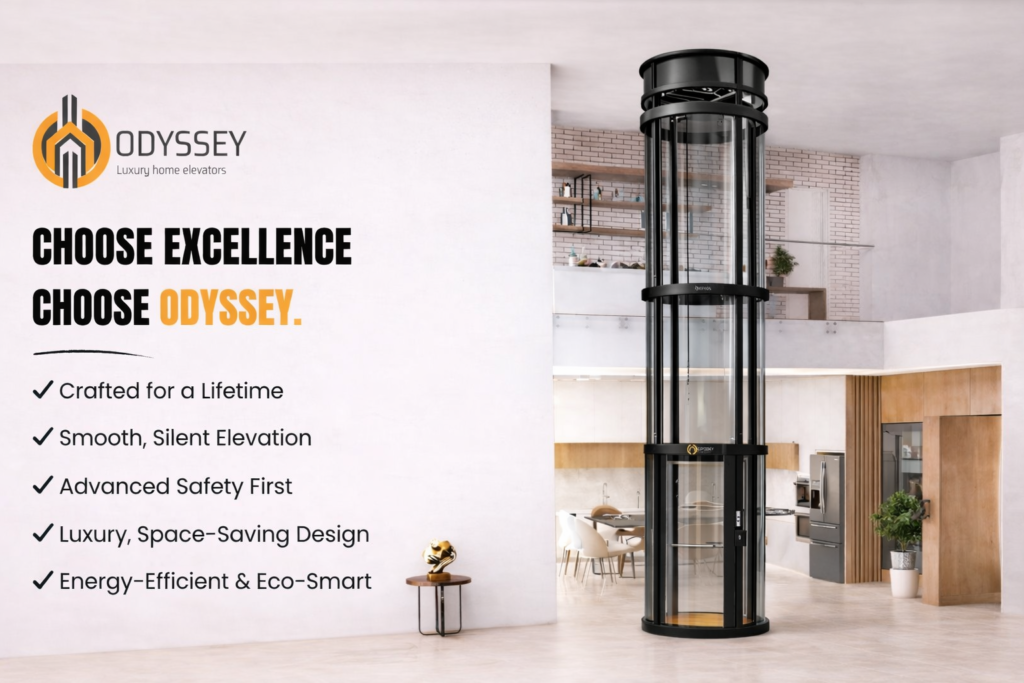
Glass and panoramic designs can create an open appearance, while other finishes can suit traditional or contemporary homes.
For Home Elevators for Independent Houses, design is particularly important when the elevator is installed in a visible part of the home.
6. Think About Everyday Accessibility
One of the main advantages of a home elevator is convenience. Moving between floors can become easier without depending entirely on the staircase.
A Home Accessibility Lift can be useful for older family members or anyone who finds frequent stair climbing difficult.
It can also make everyday tasks such as carrying groceries, luggage, and household items between floors more convenient.
This makes Home Elevators for Independent Houses useful not only for accessibility but also for everyday family life.
7. Consider the Elevator Type
Different residential elevator technologies are available, and the right choice depends on the property and the homeowner’s requirements.
An Electric Home Elevator can be considered by homeowners looking for a modern residential lifting solution. The exact specifications, capacity, and installation requirements vary between models.
When comparing Home Elevators for Independent Houses, focus on the requirements of your property rather than choosing a system based only on appearance.
8. Check Installation and Maintenance
Before purchasing an elevator, the installation location should be professionally assessed. Available space, floor configuration, electrical requirements, access points, and other site conditions should be checked.
If you are building a new house, discussing the elevator during the design stage can make planning easier. For an existing property, a site assessment can help determine the most suitable option.
Regular professional servicing is also important for reliable long-term operation. Ask about maintenance schedules, spare parts, warranty coverage, and after-sales support.
What Should You Check Before Buying?
- Available space: Check whether the elevator fits comfortably in the planned location.
- Number of floors: Consider the required stops and travel height.
- Passenger capacity: Choose a size suitable for your family.
- Safety: Understand the safety and emergency features.
- Design: Select a style that suits your home.
- Installation: Get a professional site assessment.
- Maintenance: Check service and after-sales support.
These points can make choosing Home Elevators for Independent Houses easier and help you compare different residential elevator options.
Frequently Asked Questions
What are Home Elevators for Independent Houses?
Home Elevators for Independent Houses are residential elevator systems designed to provide convenient movement between floors in independent houses, villas, and duplex homes.
Can a home elevator be installed in an existing house?
In many cases, a home elevator can be considered for an existing property. However, suitability depends on the available space, structure, floor configuration, and installation requirements.
Are home elevators suitable for villas and duplex houses?
Yes. Residential elevators can be suitable for villas, duplexes, and other multi-level homes when the selected model matches the property’s requirements.
How much space is required for a home elevator?
The space requirement varies depending on the model, cabin size, installation arrangement, and property conditions. A professional site assessment can provide a clearer answer.
How often does a home elevator need maintenance?
The maintenance schedule depends on the elevator model and manufacturer’s recommendations. Regular professional servicing helps maintain reliable operation.
Conclusion
Choosing the right elevator for your home requires more than simply selecting a stylish model. Space, floors, passenger capacity, safety, design, installation, and maintenance should all be considered.
When evaluating Home Elevators for Independent Houses, focus on your family’s current needs as well as future requirements. A properly planned residential elevator can make everyday movement between floors more comfortable and convenient.
Looking for the Right Home Elevator?
If you are planning Home Elevators for Independent Houses for your villa, duplex, or multi-level home, Odyssey Elevators can help you explore suitable residential elevator options.
Visit: Odyssey Elevators
Call: +91 95002 88001