Views: 28
Home elevator interior design has become an important part of modern residential architecture. Today, homeowners want their elevators to provide comfortable mobility while also complementing the style and personality of their homes.
Until a few years ago, home elevators were designed mainly for functionality. The focus was on helping people move comfortably between floors, especially in multi-storey houses. Today, however, homeowners are looking at elevators differently.
A well-designed home elevator interior has become an important part of modern residential architecture. From stylish villas and duplex homes to penthouses and luxury bungalows, homeowners increasingly want their elevators to match the overall personality of their interiors.
Modern homes are now designed with greater attention to:
- Elegant and personalised interiors
- Premium finishes and materials
- Open and spacious-looking layouts
- Smart home technology
- Comfortable everyday mobility
- Modern lighting and colour combinations
This has changed the way elevators are designed. Instead of looking like a separate mechanical installation, an elevator can now become a seamless part of the home.
The right choice of materials, colours, lighting, and finishes can turn an ordinary elevator into an attractive design feature that complements the entire residence.
Why Home Elevator Interior Design Matters in Modern Homes
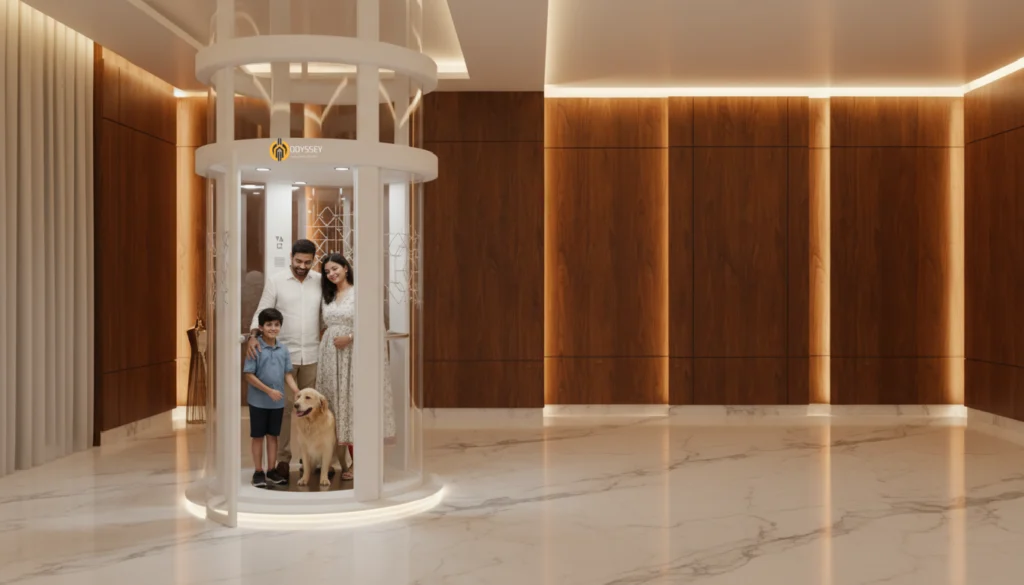
An elevator is something homeowners and their families may use every day. Naturally, its appearance should complement the rest of the living space.
A thoughtfully designed home elevator interior design can connect beautifully with different parts of the house, including:
- Living rooms
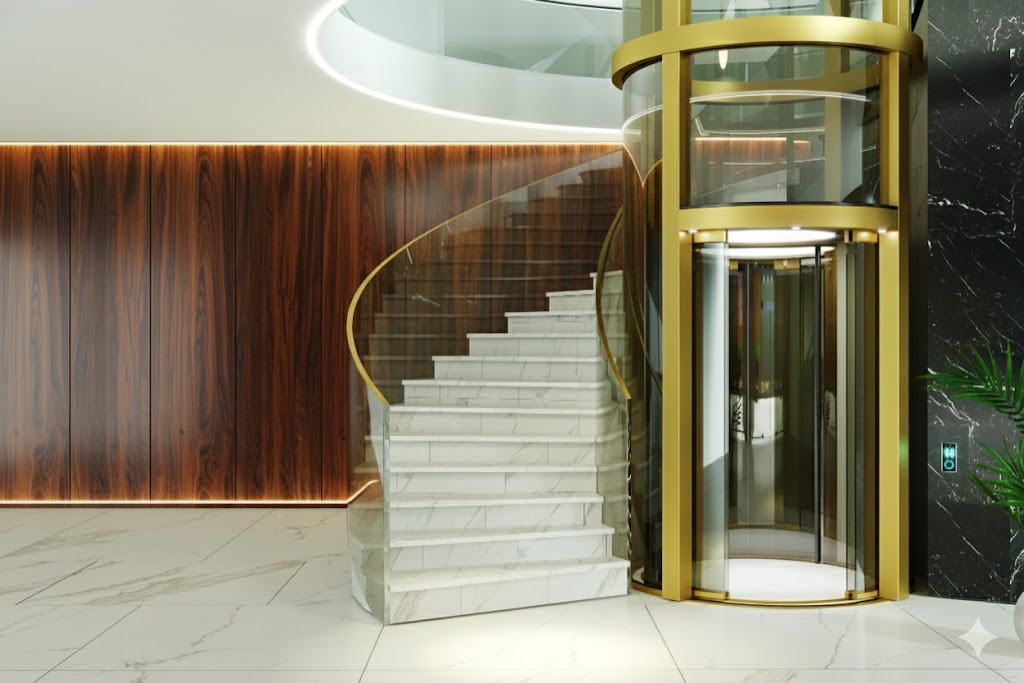
- Staircase areas
- Entrance foyers
- Private corridors
- Bedrooms and upper floors
- Duplex spaces
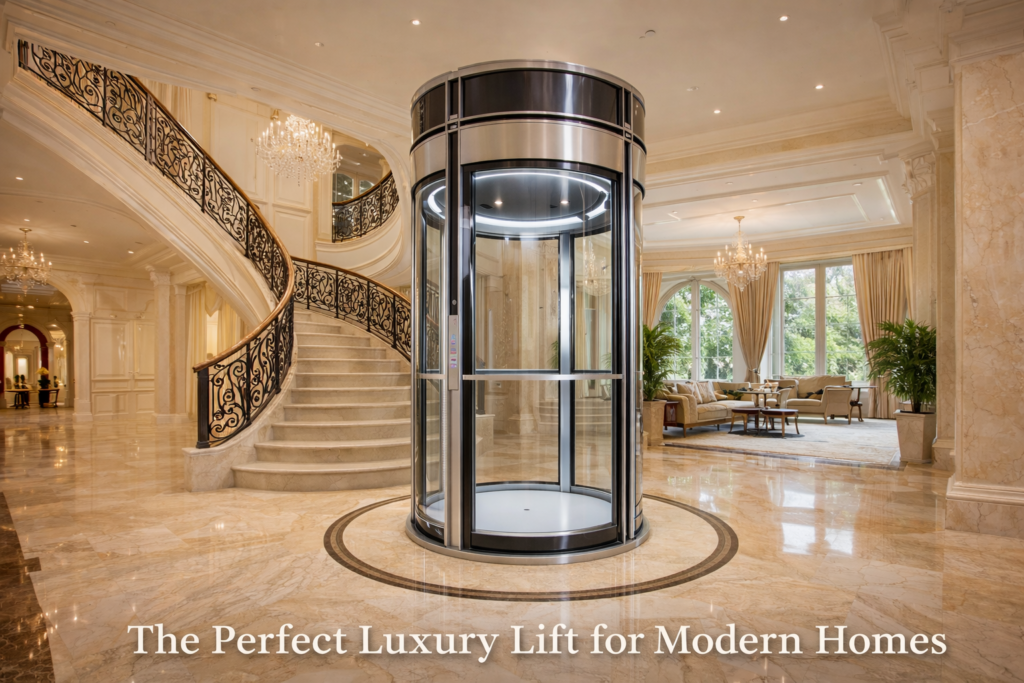
The design can be selected based on the overall theme of the house. A home with contemporary interiors may require clean lines and neutral colours, while a more luxurious residence may use metallic finishes, premium textures, and decorative lighting.
Today, homeowners no longer need to treat an elevator as something that should be hidden away. It can become an architectural element that contributes to the overall beauty of the home.
1. Home Elevator Interior Design with Glass for an Open Look
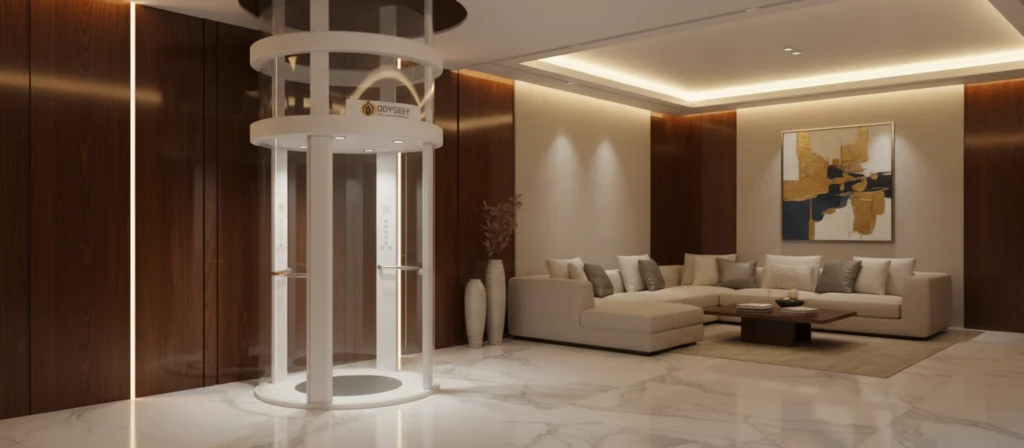
One of the most popular choices for modern residences is a glass elevator design. Glass creates a feeling of openness and allows the elevator to blend naturally into its surroundings.
Instead of visually blocking the space, transparent surfaces can make the installation feel lighter, more spacious, and more elegant. This makes glass a suitable option for homeowners who want a contemporary and open-looking interior.
A glass elevator works especially well in:
- Modern villas
- Duplex apartments
- Luxury bungalows
- Open-plan homes
- Staircase voids
- Living room spaces
The beauty of transparent materials is that they allow the architectural details of the home to remain visible. For homeowners who prefer a clean and contemporary appearance, a glass elevator design can become a sophisticated feature without making the interior feel crowded.
2. Use Neutral Colours for a Timeless Look
Colour plays an important role in creating the right home elevator interior. Neutral colours can help the cabin blend naturally with the surrounding furniture, flooring, walls, and other interior elements.
Neutral colours such as beige, white, grey, black, and soft metallic shades are often preferred because they remain stylish for years. They can also blend easily with different furniture styles and interior themes.
Popular colour combinations include:
- White and silver
- Black and gold
- Grey and metallic finishes
- Beige and bronze
- Wood textures with soft lighting
A neutral colour palette creates greater flexibility. Even if the rest of the house is redesigned in the future, the elevator is more likely to continue matching its surroundings.
For homeowners looking for a refined and elegant appearance, simplicity often creates the strongest impression.
3. Add Premium Materials and Finishes
Materials can completely transform the appearance of an elevator. Modern luxury lift interiors may include high-quality finishes that give the cabin a more refined and sophisticated feel.
Depending on the design, homeowners can choose from different materials and textures.
Some popular options include:
- Stainless steel
- Decorative wall panels
- Wood-effect finishes
- Metallic textures
- Premium flooring
- High-quality glass
- Elegant ceiling finishes
The materials should ideally complement the home’s existing interior design. For example, if a residence has wooden flooring and warm interiors, similar tones can be incorporated into the elevator.
Similarly, a highly contemporary home with marble, glass, and metallic elements can use modern finishes to create a coordinated appearance.
Good luxury lift interiors are not simply about making the elevator look expensive. They are about creating consistency between the cabin and the rest of the home.
4. Home Elevator Interior Design with the Right Lighting
Lighting can significantly improve the experience inside an elevator.
Modern lighting makes the cabin feel brighter, more spacious, and more comfortable. It can also highlight important design elements such as wall textures, glass panels, or metallic finishes.
Popular lighting choices include:
- Soft LED ceiling lights
- Diffused ambient lighting
- Decorative lighting strips
- Warm lighting for elegant interiors
- Bright lighting for contemporary homes
The lighting should not be too harsh. A comfortable and balanced arrangement usually creates the best experience.
Good home elevator interior design can use lighting to create a welcoming atmosphere while also improving visibility. When combined with quality materials and a carefully planned layout, even a compact cabin can feel refined and spacious.
5. Match the Elevator with the Overall Interior Theme
Every modern home has its own personality. The elevator should ideally reflect the same design language.
Minimalist Homes
A minimalist design can feature:
- Clean lines
- Neutral shades
- Minimal decorative elements
- Smooth surfaces
- Soft lighting
Luxury Homes
For more premium residences, homeowners may choose:
- Metallic finishes
- Decorative wall panels
- Premium textures
- Elegant lighting
- Sophisticated colour combinations
Contemporary Homes
A contemporary modern home lift may use:
- Glass panels
- Sleek surfaces
- Smart controls
- Modern colours
- Minimal detailing
Classic Homes
A classic-style elevator may include:
- Warm colours
- Wood-inspired finishes
- Decorative details
- Soft lighting
- Elegant metallic elements
The most important factor is ensuring that the elevator does not feel disconnected from the rest of the house.
6. Make the Elevator Cabin a Design Feature
An elevator cabin does not need to be visually plain.
A beautifully designed premium elevator cabin can become a memorable feature within the home. Every element, including the walls, flooring, ceiling, lighting, and controls, contributes to the overall experience.
Homeowners can personalise the cabin with:
- Custom finishes
- Unique colour combinations
- Stylish flooring
- Designer ceilings
- Premium control panels
- Decorative wall textures
Personalisation allows the elevator to reflect the homeowner’s individual taste.
For some, the ideal design may be simple and understated. For others, it may feature bold colours or luxurious finishes. The key is to create a balanced look that complements the overall character of the residence.
7. Balance Design and Everyday Function
A beautiful elevator should also be practical.
A good modern home lift should provide a combination of comfort, safety, smooth movement, and visual appeal. Effective home elevator interior design should combine these practical requirements with an attractive cabin appearance.
Important considerations include:
- Comfortable cabin space
- Easy-to-use controls
- Good lighting
- Safe flooring
- Smooth operation
- Quality finishes
- Easy maintenance
Homeowners should not have to choose between appearance and functionality. Modern elevator technology allows both to work together.
When selecting finishes and materials, it is also important to consider how frequently the elevator will be used and how easy the surfaces will be to maintain.
8. Home Elevator Interior Design: Focus on Small Details
The beauty of a well-designed home elevator interior often comes from the smallest details.
Elements such as:
- Control panel design
- Floor texture
- Handrail finish
- Ceiling pattern
- Lighting placement
- Door finish
- Wall panels
can completely change the appearance of the elevator.
These details should be selected carefully to create a cohesive look. Even a simple cabin can look highly sophisticated when the finishes are properly coordinated.
The design should feel intentional from the moment the elevator doors open until the passenger reaches the next floor.
9. Personalise the Design Without Overdoing It
Personalisation is one of the biggest advantages of modern residential elevators. However, a good design does not necessarily mean adding too many elements.
A balanced home elevator interior design should feel elegant rather than crowded.
Homeowners can personalise their elevator through:
- Colours
- Materials
- Lighting
- Flooring
- Wall finishes
- Control panel styles
The best designs often use only a few carefully selected elements.
For example, elegant glass, soft lighting, and premium flooring can create a stronger impression than a cabin filled with too many colours and decorative finishes.
Luxury often comes from thoughtful design and attention to detail.
10. Choose Finishes That Feel Premium and Comfortable
The materials and finishes used inside the elevator have a major influence on how comfortable the space feels.
A carefully designed premium elevator cabin can combine high-quality materials, balanced lighting, elegant finishes, and comfortable space to create a better everyday experience.
Rather than selecting every available design feature, homeowners should focus on finishes that work well together. The flooring, wall panels, lighting, and control elements should create one consistent visual experience.
This approach helps the elevator feel like a natural extension of the home rather than a separate addition.
Frequently Asked Questions About Home Elevator Interior Design
1. How can I design a home elevator to match my house?
The best approach is to select colours, materials, lighting, and finishes that complement the overall theme of your home. The elevator can be designed to suit modern, luxury, minimalist, or classic interiors.
2. Are glass elevators suitable for homes?
Yes. Glass elevators are highly suitable for modern homes, especially villas, duplexes, and open-plan residences. They can create a spacious and elegant appearance while becoming part of the overall architecture.
3. What materials are commonly used for luxury elevator interiors?
Popular materials include premium glass, stainless steel, decorative panels, wood-effect finishes, metallic textures, quality flooring, and sophisticated lighting.
4. What makes an elevator cabin look premium?
A cabin can achieve a premium appearance through high-quality materials, balanced lighting, elegant finishes, comfortable space, and carefully designed details.
5. Can a home elevator be customised?
Yes. Many residential elevators can be customised through different finishes, colours, lighting options, cabin materials, and design elements to match the style of the home.
Elevating Modern Homes Through Better Design
Home elevators are no longer just about moving from one floor to another. They have become an important part of modern residential design.
A thoughtfully planned elevator can improve the overall appearance of a home while providing everyday comfort and accessibility. From elegant finishes and personalised materials to intelligent lighting and transparent surfaces, homeowners now have more opportunities to create an elevator that matches their lifestyle.
The right home elevator interior design should blend beautifully with the architecture while providing a smooth and comfortable experience. With carefully selected materials and thoughtful planning, an elevator can become both a practical mobility solution and a valuable interior feature.
As modern homes continue to become more personalised and design-focused, elevators will increasingly become part of the interior story. The right design can turn a simple mobility solution into a feature that adds comfort, character, and sophistication to the entire home.