
Views: 60
How to Choose the Right Home Elevator for Your Villa
Choosing a home elevator for villa living is an important decision. The right elevator should suit your villa’s layout, available space, family needs, and interior design.
A villa elevator can make everyday movement between floors easier while adding convenience and style to a multi-storey home. With different sizes, technologies, and designs available, choosing the right option can sometimes feel confusing.
Whether you are building a new villa or upgrading an existing property, this guide will help you understand what to consider before choosing a residential elevator.
1. Start With Your Villa’s Requirements
Every villa has different requirements. The number of floors, floor height, available space, family size, and expected elevator usage can all influence your choice.
Think about how your family will use the elevator. Will it mainly carry passengers, or will you also use it for groceries, luggage, laundry, or other household items?
Understanding these needs will help you choose the right cabin size, capacity, and elevator configuration for your home elevator for villa installation.
2. Check the Available Installation Space
Space is one of the first things to consider when planning a villa elevator.
An elevator requires more than space for the cabin. You may also need room for doors, a shaft or enclosure, equipment, electrical connections, headroom, and required clearances.
If you are building a new villa, the elevator can be planned along with the structure. For an existing villa, a professional site assessment can help identify a suitable installation location.
For a home elevator for villa installation, the complete installation area should be checked before selecting a model.
3. Choose the Right Cabin Size
Cabin size should be based on how you expect to use the elevator.
A compact cabin may be suitable for basic passenger travel, while a larger cabin can provide more comfort and make it easier to carry groceries, luggage, laundry, or other items.
When comparing options for a home elevator for villa living, ask for the complete installation dimensions instead of looking only at the cabin size.
4. Consider the Number of Floors
The number of floors in your villa can affect the elevator specification.
Travel distance, floor-to-floor height, stopping points, passenger capacity, and expected usage should be considered before selecting a model.
A two-storey villa may have different requirements from a larger multi-storey property. Discuss your villa’s floor plan with the elevator provider so the system can be selected according to the building.
5. Make Safety a Priority
Safety should always be one of the most important factors when choosing a residential elevator.
Ask the provider to explain the safety features included with the specific model. Depending on the system, these may include door sensors, emergency alarms, emergency lowering, backup arrangements, and other safety mechanisms.
You should also understand how the elevator responds during a power failure. A reliable provider should explain these features clearly before installation.
Safety should remain a key consideration when selecting a home elevator for villa use.
6. Match the Elevator With Your Villa’s Design
A villa elevator does not have to look like commercial equipment.
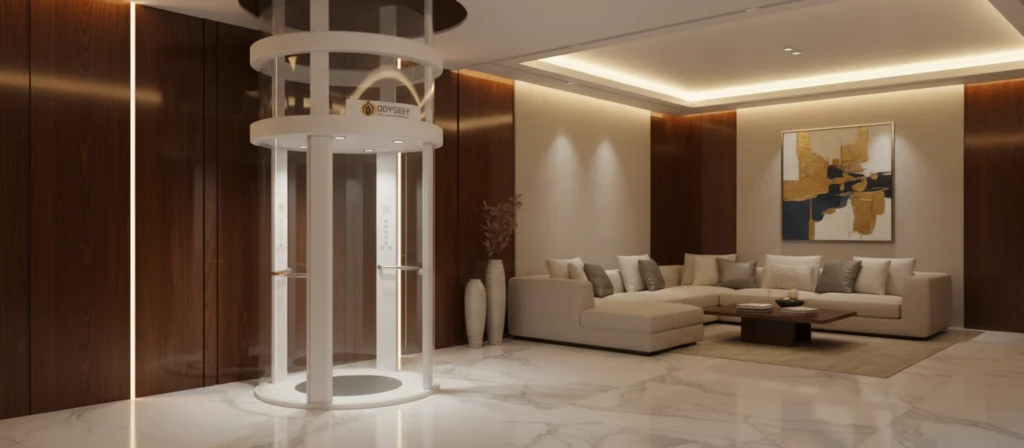
Modern residential elevators can be designed with different cabin finishes, flooring, lighting, doors, glass elements, and materials. These options can help the elevator complement your villa’s architecture and interiors.
If you are looking for a luxury home elevator, premium finishes and customised cabin designs can create a more refined appearance.
The aim is to make the elevator feel like a natural part of your villa.
7. Decide Between a Compact or Larger Elevator
Not every villa needs a large elevator. If your available space is limited and the elevator will mainly be used by two or three people, a compact system may be a practical choice.
A larger cabin may be more suitable for bigger families or homeowners who regularly move larger items between floors.
The best elevator size is the one that provides enough comfort and functionality without using unnecessary floor space.
8. Understand the Elevator Technology
Residential elevators are available with different technologies and operating systems.
The right technology depends on factors such as the number of floors, travel distance, available space, capacity, and installation requirements.
When comparing home elevator for villa options, ask the provider to explain the technology and why it is suitable for your property.
Rather than choosing an elevator simply because it uses newer technology, focus on whether the system meets your home’s practical requirements.
9. Check the Power Requirements
Power requirements should also be considered before installation.
Electrical requirements can vary depending on the elevator technology, motor, cabin capacity, number of floors, and travel distance.
Ask for the power requirements of the specific model recommended for your villa. You should also find out whether additional electrical work will be required.
Understanding these requirements early can help you plan the installation and avoid unexpected changes.
10. Ask About Maintenance and Warranty
An elevator is a long-term investment, so maintenance should be part of your decision.
Ask how frequently the elevator should be serviced and which components are normally inspected. It is also useful to understand spare-parts availability and technical support.
Before choosing a model, ask what the warranty covers and how long it lasts.
Good after-sales service can make ownership easier and support reliable operation of your home elevator for villa over the years.
11. Plan the Elevator During Villa Construction
If you are building a new villa, planning the elevator during the design stage can provide greater flexibility.
The architect, builder, and elevator provider can coordinate the elevator location, entrances, shaft or enclosure, electrical requirements, and structural elements.
Early planning also makes it easier to integrate the villa elevator into the architecture instead of modifying the property later.
It gives you more time to compare elevator designs, finishes, technologies, and installation requirements.
12. Adding an Elevator to an Existing Villa
You do not necessarily need a new building to install a home elevator for villa living.
In some existing villas, an elevator can be added depending on the structure, available space, floor heights, and selected system.
Potential locations may include staircase areas, existing voids, open corners, corridors, extensions, or spaces being modified during renovation.
Because every property is different, a professional site assessment should be completed before selecting the elevator.
13. Compare the Complete Installation Cost
Price is important, but the cheapest quotation may not always provide the best long-term value.
When comparing elevators, ask what is included in the quoted price. This may include the elevator, installation, transportation, electrical work, civil work, testing, commissioning, cabin finishes, and other services.
Also ask whether additional costs could arise during installation.
When buying a home elevator for villa living, comparing the complete project cost is more useful than comparing the starting price alone.
14. Think About Your Future Needs
Your elevator should suit your family not only today but also in the years ahead.
Family requirements can change over time. Older family members may find stairs more difficult, while an elevator can make movement between floors and carrying household items easier.
Consider how your family may use the elevator several years from now before making your final decision.
Thinking about these future requirements can help you choose a home elevator for villa that remains practical for your family over time.
What Should You Ask Before Choosing a Villa Elevator?
Before making your decision, ask the elevator provider:
- Which elevator is suitable for my villa?
- How much installation space is required?
- What cabin sizes are available?
- How many passengers can it carry?
- What safety features are included?
- What are the power requirements?
- Is structural or civil work required?
- What cabin finishes are available?
- How often does the elevator require maintenance?
- What does the warranty cover?
- Are spare parts readily available?
- What after-sales support is provided?
- What is included in the total project cost?
Having clear answers can make it easier to compare different options and choose with confidence.
Frequently Asked Questions
1. What type of elevator is best for a villa?
The best home elevator for villa applications depends on available space, number of floors, capacity, design preferences, and intended usage. A professional assessment can help identify a suitable option.
2. How much space does a villa elevator need?
The required space varies by elevator model, cabin size, door configuration, shaft or enclosure, and installation conditions. There is no single size that suits every villa.
3. Can I install a residential elevator in an existing villa?
Yes, it may be possible depending on the building structure, available space, floor heights, and selected elevator system. A professional site assessment should be completed before installation.
4. Can a villa elevator be customised?
Many residential elevator systems offer different cabin finishes, lighting, flooring, doors, glass elements, and other design options. Available choices depend on the specific model.
5. Is a luxury home elevator suitable for a villa?
Yes. A luxury home elevator can be suitable if you want premium finishes and an elevator that complements your villa. The final choice should still consider space, safety, functionality, and budget.
Conclusion
Choosing the right home elevator for villa living involves more than comparing designs and prices.
Consider your available space, cabin size, number of floors, safety features, elevator technology, power requirements, design preferences, maintenance, warranty, service support, and total installation cost.
Whether you are building a new villa or upgrading an existing property, professional guidance can help you select an elevator that fits your home and family’s needs.
The right villa elevator should make movement between floors easier while becoming a comfortable and attractive part of your home.
Looking for the Right Home Elevator for Your Villa?
Planning to add a residential elevator to your villa?
Speak with the Odyssey Elevators team about your home’s layout, available space, design preferences, and family requirements. Our team can help you explore suitable elevator options for your property.
📞 Call us: +91 95002 88001
🔗 Learn more: Odyssey Elevators
Get your property assessed and choose a home elevator for villa living that fits your home, lifestyle, and long-term needs.