
Views: 2
Modern homes are increasingly designed to provide comfort, convenience and accessibility for every family member. As independent houses and multi-storey residential buildings become more common, installing a home lift is becoming a practical choice for homeowners. Whether you are constructing a new house or upgrading an existing property, choosing the right lift requires careful planning.
Installing lifts for houses is not just about improving convenience. It also helps individuals with mobility challenges, senior citizens and families who want easier access between floors. However, before making a decision, homeowners should evaluate several factors, including available space, safety features, installation requirements, design and maintenance.
Understanding these considerations will help you select a suitable lifting solution that matches your home’s structure and long-term requirements.
1. Evaluate the Available Space in Your House
Space availability is one of the first factors to consider before installing a home lift. Every residential property has a different layout, so the installation requirements may vary depending on the building design and available floor area.
Before selecting a lift, evaluate:
- Lift shaft availability: Check whether your house has an existing lift shaft or requires a new space to be created.
- Floor dimensions: Measure the available area to determine a suitable lift size.
- Number of floors: Consider how many levels the lift needs to serve.
- Entrance accessibility: Ensure that the lift entrance is conveniently positioned for easy access.
- Structural requirements: Consult professionals to assess whether modifications are needed.
For existing houses with limited space, compact lift designs may be worth exploring. Planning these requirements during the construction stage can also reduce the need for major structural changes later.
2. Choose the Right Type of Home Lift
Not every home requires the same type of elevator. The right choice depends on your property layout, family requirements, available space and budget.
When exploring different Home Lifts, consider the following options:
Hydraulic Home Lifts
These lifts use hydraulic systems to move the elevator platform between floors. They can be suitable for certain residential applications, depending on the building configuration and installation requirements.
Traction Home Lifts
Traction elevators use a motor-driven system to move the lift car. They are commonly considered for residential buildings that require reliable vertical transportation across multiple floors.
Machine Room-Less Lifts
Machine Room-Less (MRL) elevators are designed without a separate machine room. They can help optimize building space and are worth considering for modern residential properties.
Compact Residential Lifts
Compact lift solutions are designed for houses where available installation space is limited. Their suitability depends on the number of floors, capacity and structural conditions.
Before finalising a model, compare its specifications, operating requirements and suitability for your property.
3. Prioritise Safety Features and Reliability
Safety should always be a major consideration when installing a residential elevator. Since family members of different age groups may use the lift, it is important to choose a system with appropriate safety mechanisms.
Some essential safety features to check include:
- Emergency alarm: Allows passengers to request assistance if they become stuck inside the lift.
- Emergency lowering: Helps bring the lift to a safe landing during certain power interruptions, depending on the system.
- Door safety sensors: Help prevent doors from closing when an obstruction is detected.
- Overload protection: Prevents the lift from operating when the permitted weight capacity is exceeded.
- Automatic rescue device: Provides a means of moving the lift to a landing during a power failure.
- Emergency communication: Allows passengers to contact assistance when required.
Apart from checking individual features, ask about the lift’s applicable safety standards, installation quality and regular inspection requirements.
A professionally installed elevator with suitable safety systems can provide greater confidence for everyday use.
4. Consider Lift Capacity and Family Requirements
Choosing the right lift capacity is important for ensuring comfortable and convenient usage. Before selecting a model, consider the number of people who may use it regularly.
For example, a small household may require a different capacity compared with a large family living in a multi-storey villa.
Consider these requirements:
- Number of regular users.
- Maximum permitted weight capacity.
- Space required for comfortable entry and exit.
- Accessibility requirements for senior citizens.
- Whether wheelchair access is necessary.
- Frequency of daily lift usage.
If elderly family members or individuals with mobility difficulties will use the elevator, consider appropriate cabin dimensions, easy-to-operate controls and accessible entrances.
Choosing suitable Domestic Lifts for Houses requires balancing passenger capacity, available space and everyday convenience.
5. Check Installation Costs and Long-Term Maintenance
The overall cost of installing a home lift depends on several factors. The initial purchase price is only one part of the investment. Homeowners should also understand the ongoing expenses associated with operating and maintaining the elevator.
Important cost considerations include:
Installation Expenses: Costs may vary depending on lift technology, building structure, number of floors and installation complexity.
Electrical Requirements: Check the power requirements and expected electricity consumption of the selected lift.
Maintenance Charges: Ask about routine servicing, inspections and replacement of components when necessary.
Warranty Coverage: Understand which components and services are included in the warranty.
Spare Parts Availability: Check whether replacement parts and technical support are accessible when required.
Request a detailed quotation from the elevator provider instead of comparing options based only on the initial price.
Understanding the total ownership cost will help you make a more informed decision.
6. Match the Lift Design with Your Home Interiors
A residential elevator should complement the overall appearance of your home. Modern home lifts are available in different cabin finishes, door styles and design configurations.
When choosing a design, consider:
- Cabin materials and interior finishes.
- Lighting arrangements.
- Door design and opening mechanism.
- Control panel placement.
- Cabin visibility and overall appearance.
- Compatibility with your home’s interior theme.
For contemporary villas and premium independent houses, a well-designed elevator can become an attractive part of the interior layout.
However, aesthetics should not take priority over safety, functionality and installation suitability.
7. Select a Reliable Home Lift Manufacturer and Installer
The quality of the manufacturer and installation team has a direct impact on the performance and reliability of your residential elevator.
Before selecting a provider, evaluate the following:
- Experience in residential elevator installations.
- Range of available lift models.
- Product specifications and safety documentation.
- Installation and commissioning process.
- Warranty and after-sales support.
- Availability of maintenance services.
- Customer feedback and completed projects.
A professional provider should also assess your property before recommending a suitable model. This helps ensure that the proposed lift matches your building requirements.
Make the Right Choice for Your Home with Odyssey Elevators
Installing a residential elevator is an important decision that can improve everyday convenience and accessibility. From evaluating available space and selecting the right lift type to understanding safety features and maintenance requirements, every factor deserves careful consideration.
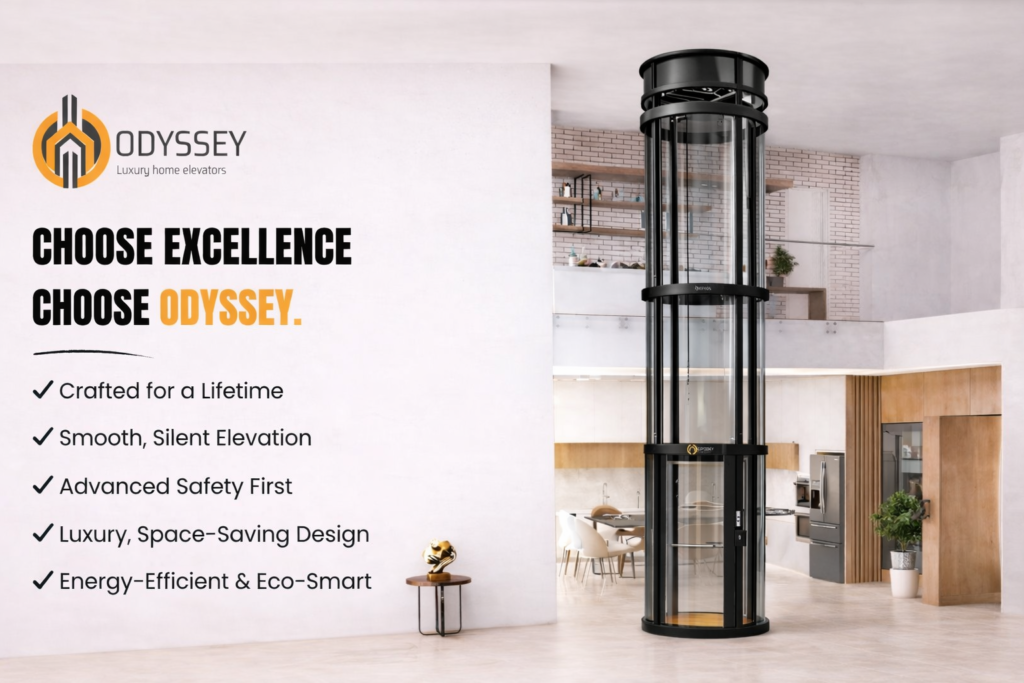
If you are exploring lifts for houses, Odyssey Elevators offers residential lift solutions designed to meet different home requirements. Whether you are planning a new villa or upgrading an existing independent house, choosing a suitable elevator can make movement between floors more convenient.
Explore Affordable Home Lifts from Odyssey Elevators and find a residential elevator solution that complements your property.
Planning to install a home lift? Contact Odyssey Elevators today to discuss your requirements and explore suitable lift options for your home.